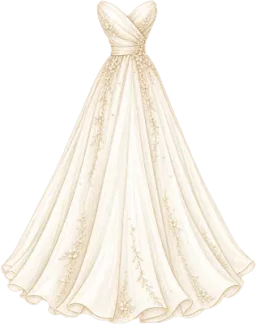
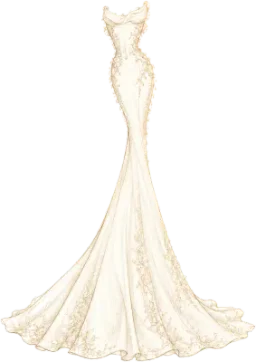
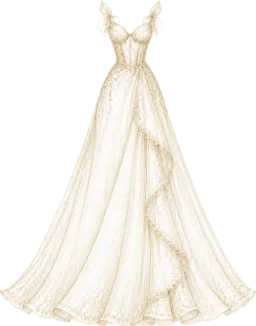
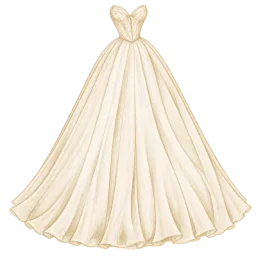
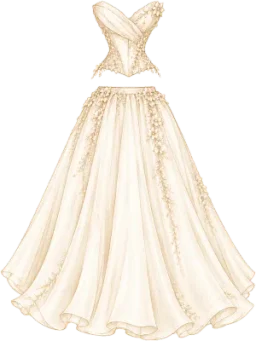
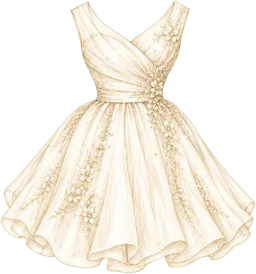
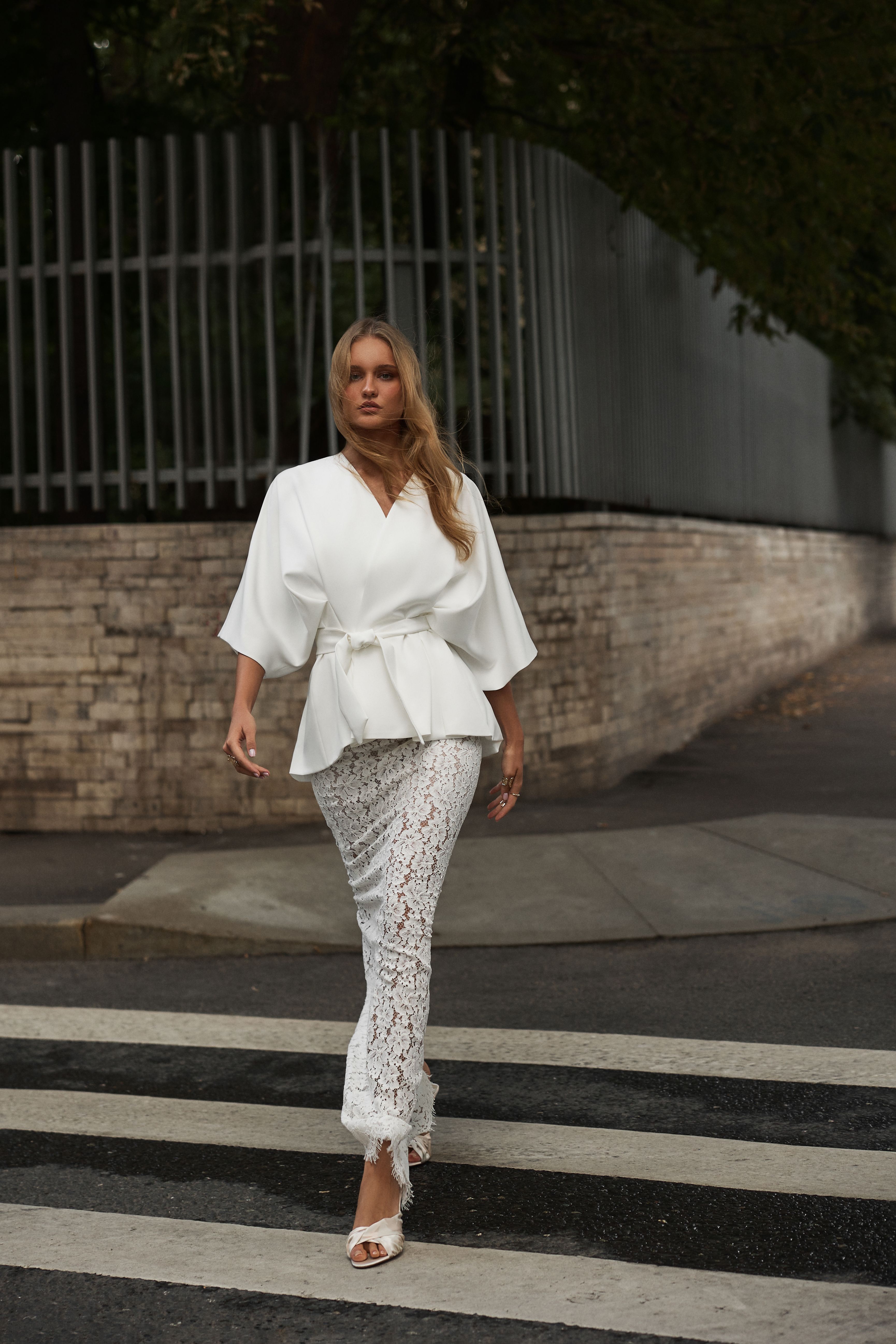
A church ceremony and a civil ceremony may have different dress expectations. Requirements vary by denomination, congregation and venue, so confirm them directly with the church before choosing your outfit.
Clarify the Requirements First
Ask about shoulders, neckline, skirt length, transparent panels and any expectations around head coverings. Do not assume that a rule from another ceremony applies to yours.
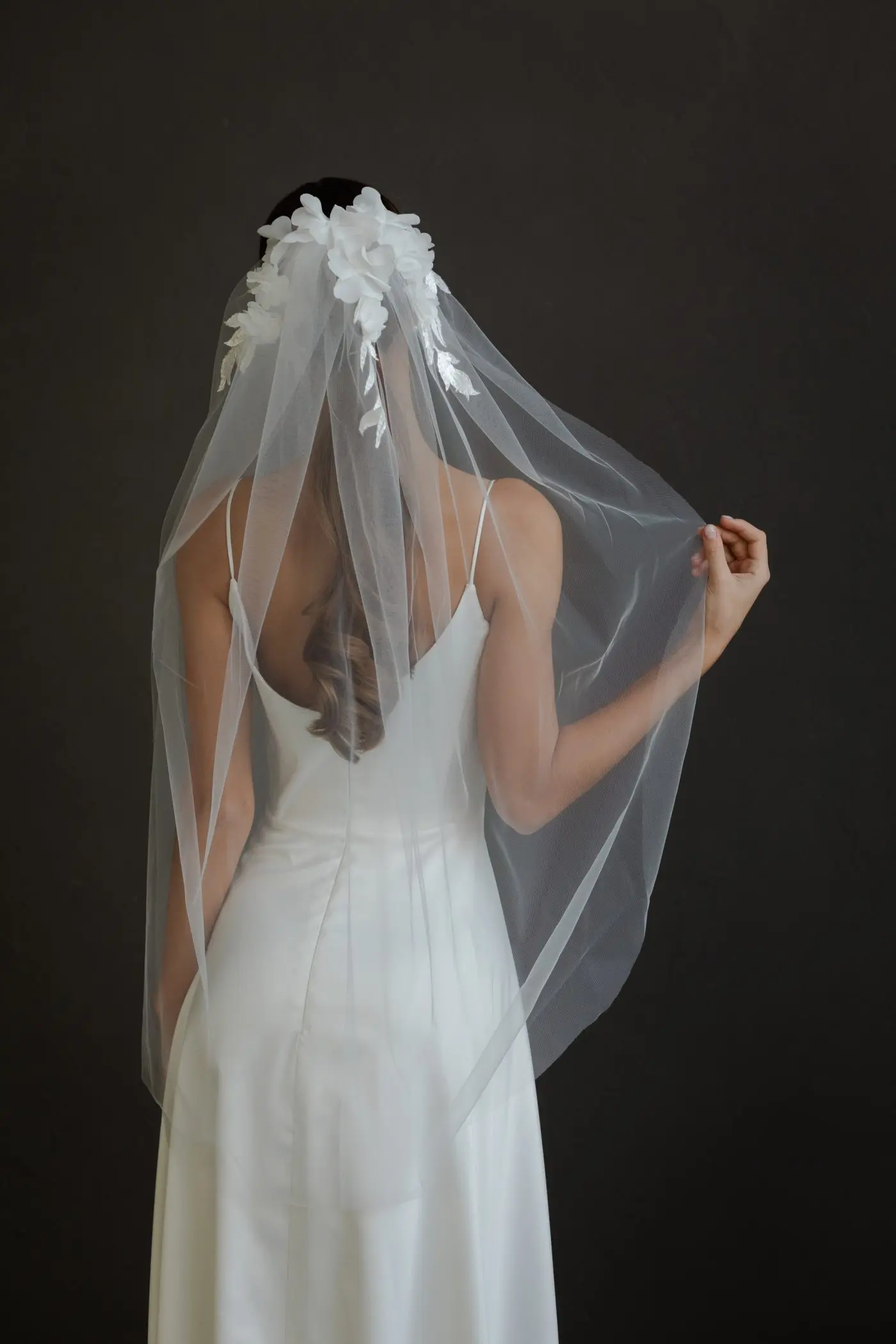
A veil or lace scarf may be an option where a covering is requested; a comb, floral headpiece or hat may work in other settings. Age does not determine which accessory you should choose. Check both the ceremony requirements and how the piece works with your hairstyle.

Plan the Complete Ceremony Look
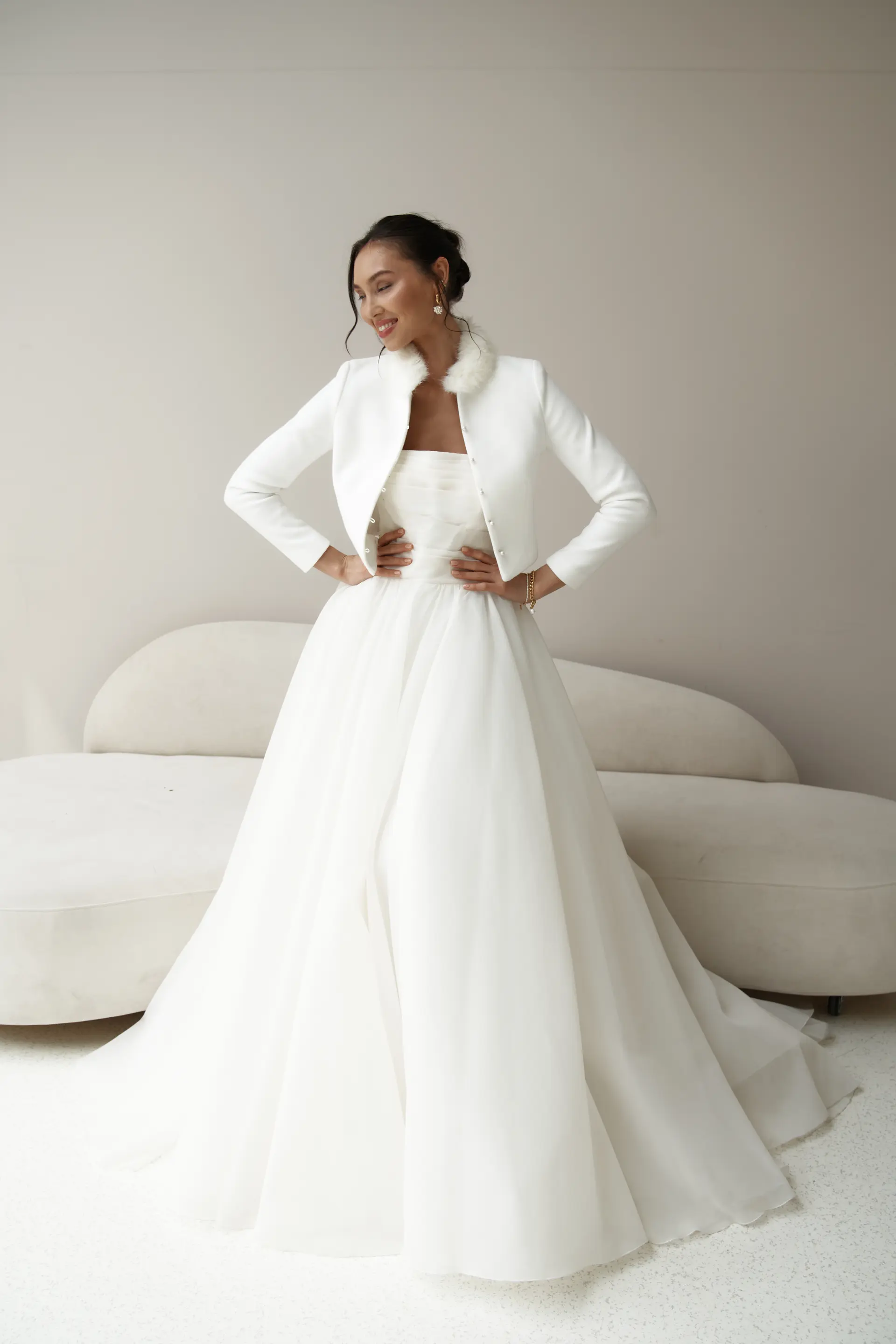
Review the dress together with any veil, scarf, bolero or cape. If coverage is required, check the opacity of the fabric and whether the layer stays in place when you move.
Consider practical details such as standing, sitting, steps and the length of the ceremony. Share photographs with your church contact if you are unsure whether a particular neckline or layer meets their expectations.
Which Silhouette Should You Choose?
A suitable silhouette depends on your preferences, comfort and the requirements confirmed with your church. A particular cut is not automatically permitted or prohibited everywhere.
A-Line
An A-line dress widens gradually from the waist and can provide space for movement without a very broad skirt. Lace and satin give this outline different textures.
Explore A-line wedding dresses and compare the actual neckline, lining and skirt length of each model.

Whatever the silhouette, check that you can sit, climb steps and get in and out of transport comfortably. Fit, hem length and the amount of fabric affect movement.
Long Sleeves
A lace upper section can provide a lighter-looking alternative to solid fabric. However, visible coverage and warmth depend on the lining and construction; sheer lace may not meet your church’s requirements.
Detachable sleeves offer a way to change the look after the ceremony. Confirm whether they are included, how they attach and whether the finished outfit provides the coverage you need.
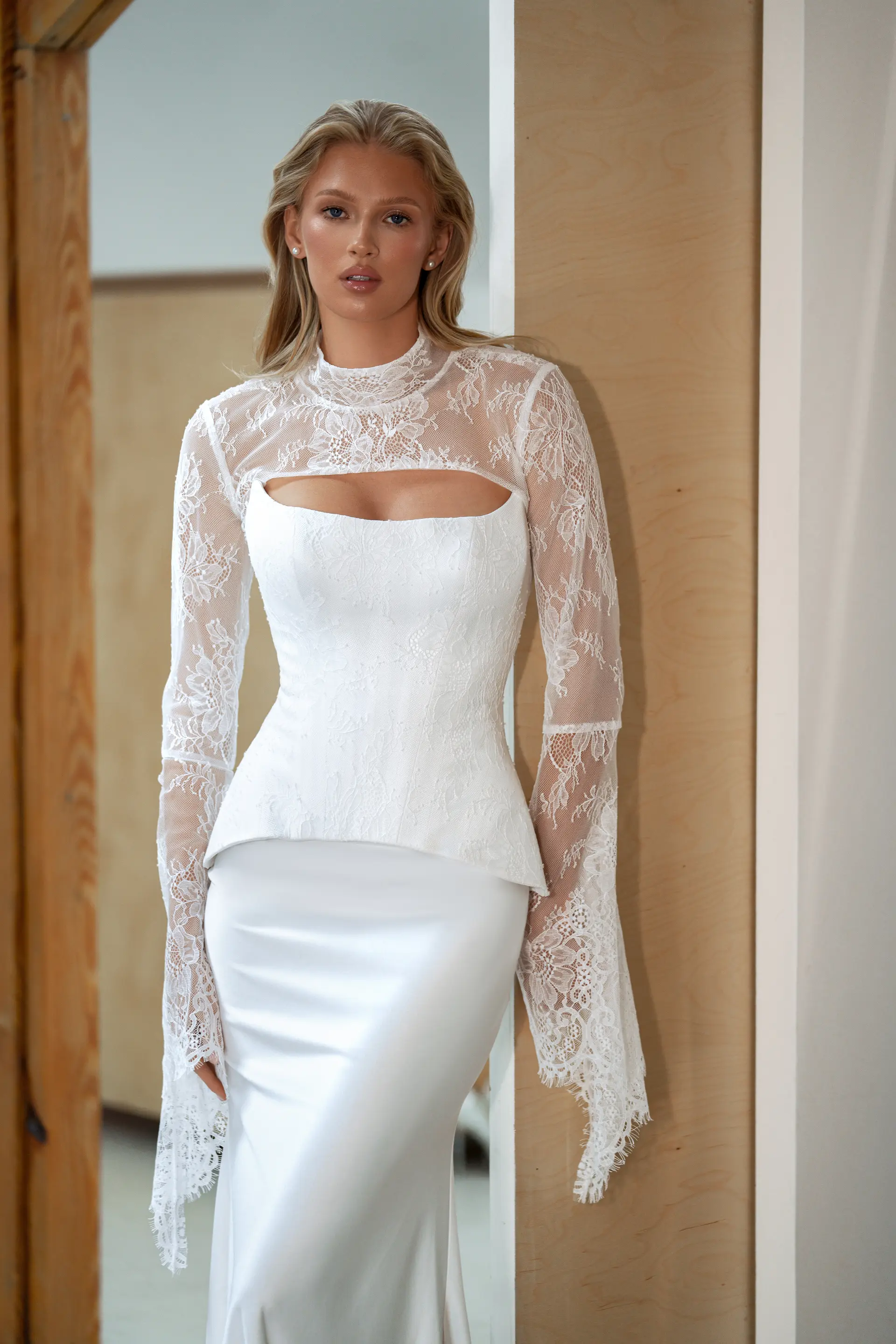
Mermaid and Fit-and-Flare Shapes
A fitted dress with a flared skirt can also be considered if its details meet the ceremony requirements. Freedom of movement depends on where the skirt flares and how closely it fits, so check the design rather than assuming every mermaid dress allows the same stride.
Empire-Waist Styles
An empire waist places the seam higher on the body, with fabric falling below it. This may appeal if you prefer a less fitted waist or are choosing a dress during pregnancy.
Discuss sizing and timing with the manager, and arrange any final adjustments with a local alterations specialist. Sleeves and a higher neckline can be additional styling options where desired.
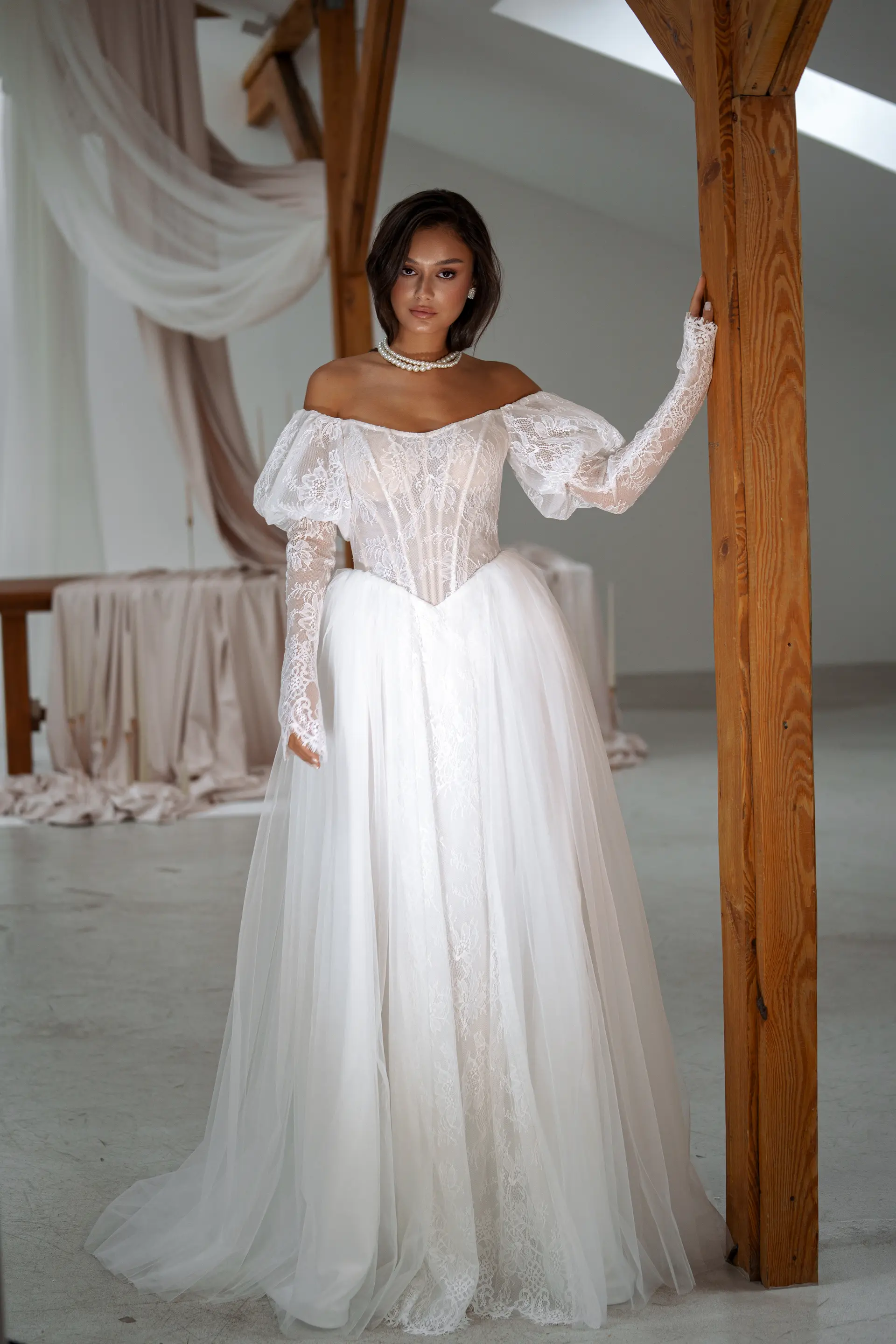
A Bolero or Cape
A removable layer can adapt the dress for the ceremony and create a different reception look. Lace, tulle and organza offer different levels of transparency; a high collar or longer sleeves alone does not guarantee sufficient coverage.
Fabric and Lining
Chiffon and satin are among the fabrics to consider. Where opaque coverage is required, check whether sheer sections have a suitable lining and ask the church if you are uncertain.
Explore dresses for a church ceremony and send Florintini the designs you like. We can discuss the model details online, while your church confirms ceremony suitability. After delivery, a local specialist can help with any final alterations.